Japanese Design and the Power of the Circle
Feb 9, 2026
An Ancestral Japanese Approach, Seen Through Hokusai
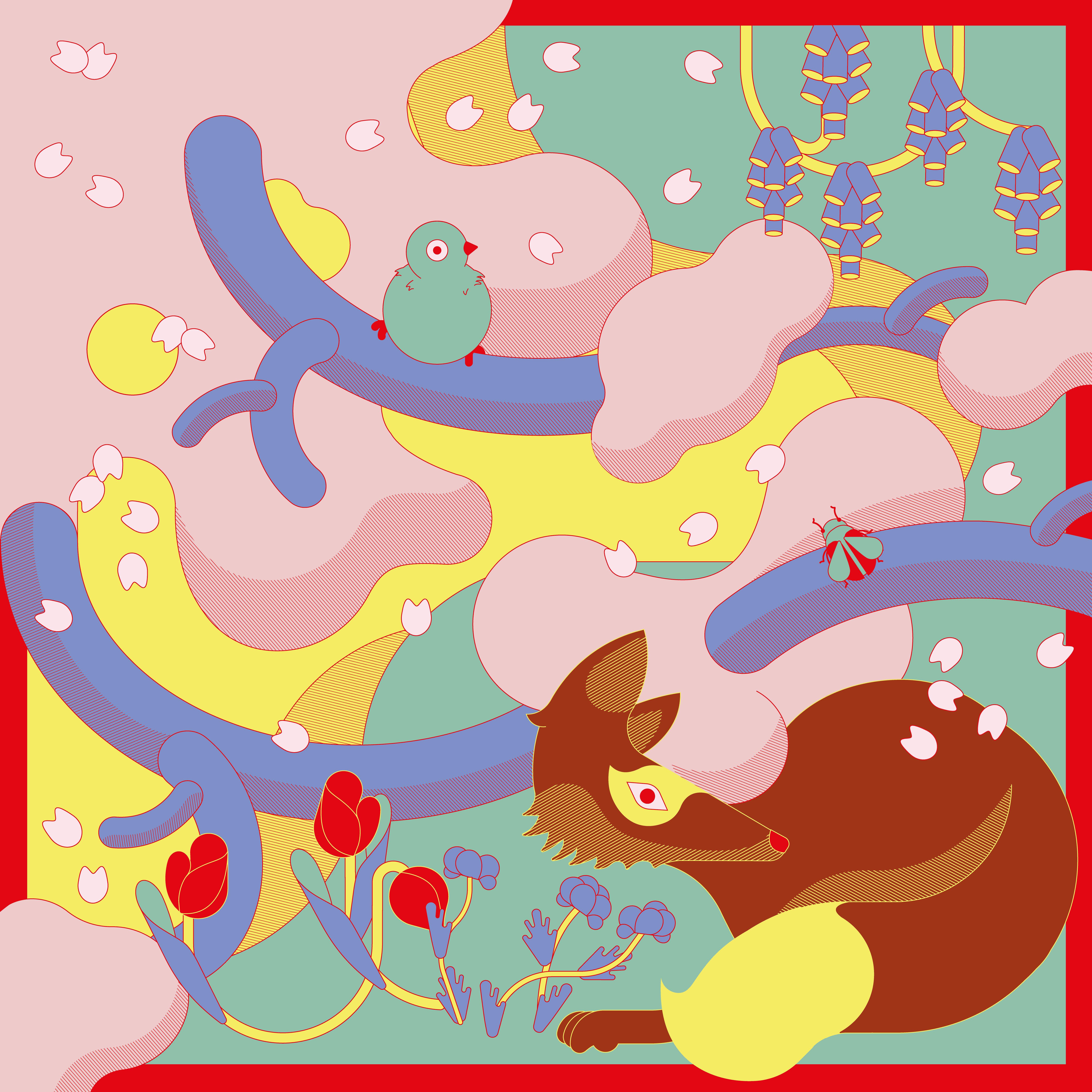
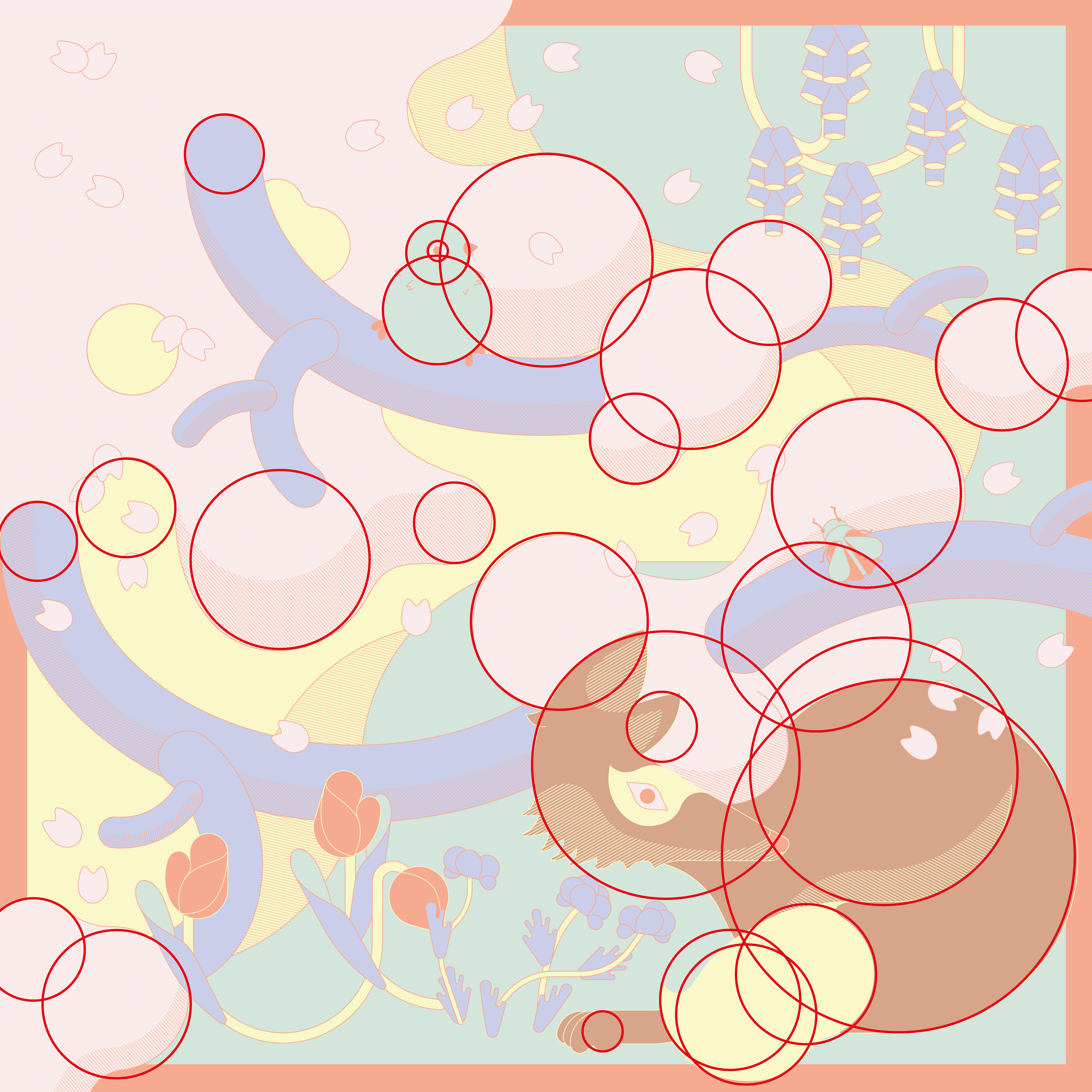
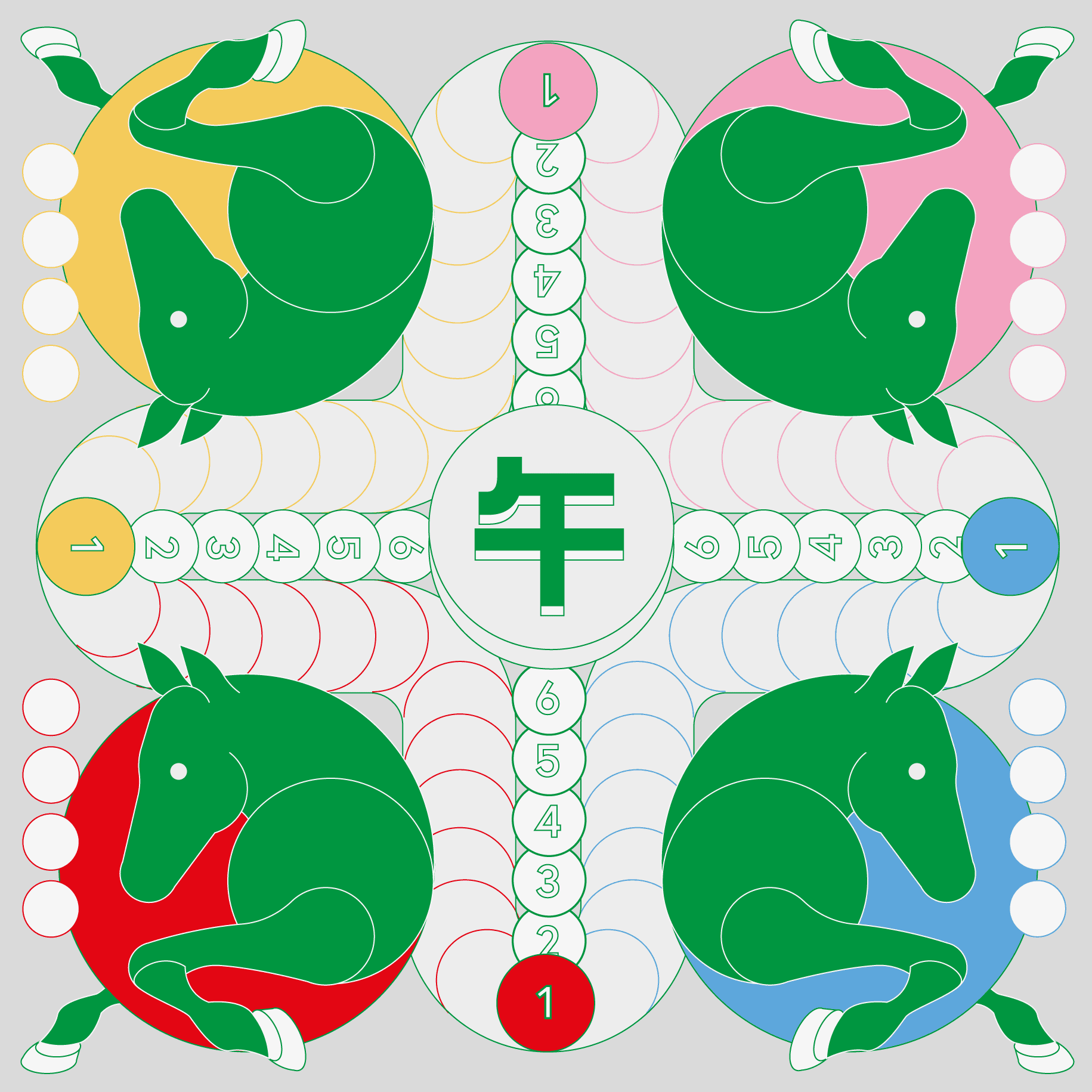
For a long time, I didn’t really question why the circle played such an important role in my work. This became more conscious for me when I was repeatedly asked about it in interviews for design magazines and books. But initially, I used it instinctively. To build animals, bodies, organic forms. But also as a graphic tool, to structure layouts, balance compositions, and create visual harmony.
It wasn’t a theory. It was simply how things felt right. It also emerged naturally in my work, unconsciously, as I became more immersed in Japanese aesthetics. I somehow felt circles was a structural element of Japanese design.
An recently, I discovered the drawing manuals of Katsushika Hokusai, and something immediately clicked.
Learning to draw from simple forms
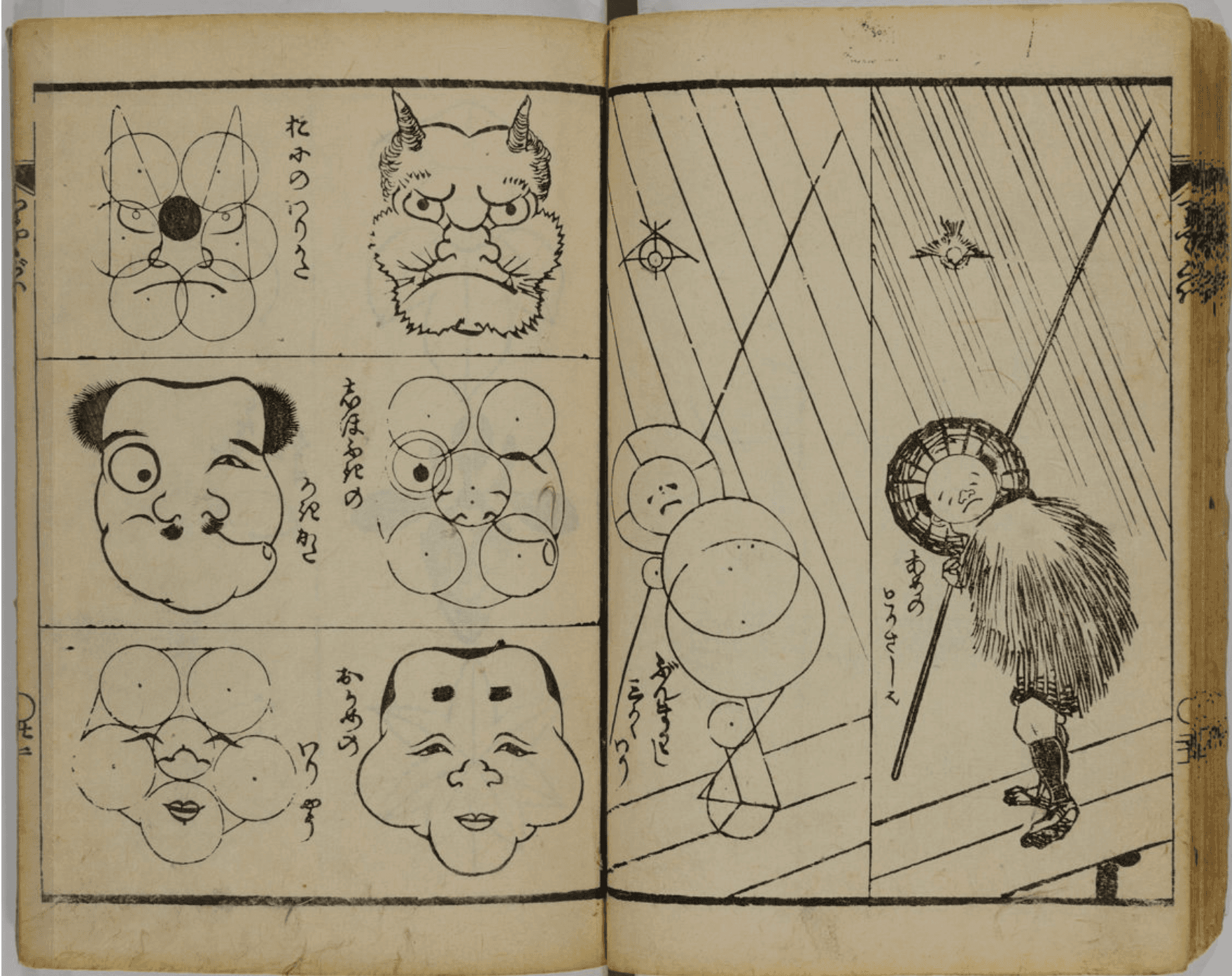
Hokusai is widely known for his ukiyo-e prints, but he also produced several drawing manuals intended as practical teaching tools. Among them, Ryakuga soku shinan stands out as a remarkably clear and visual guide to drawing.
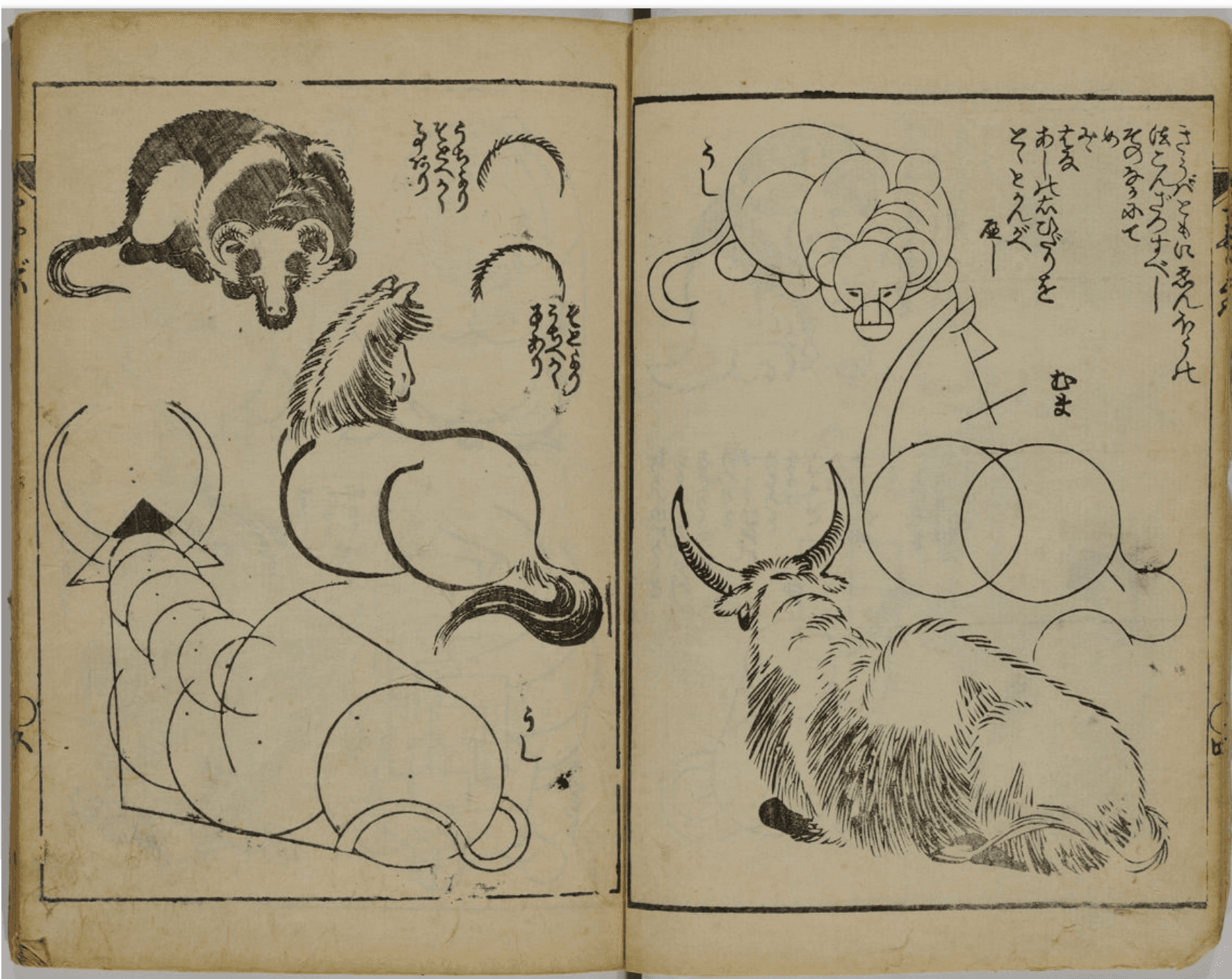
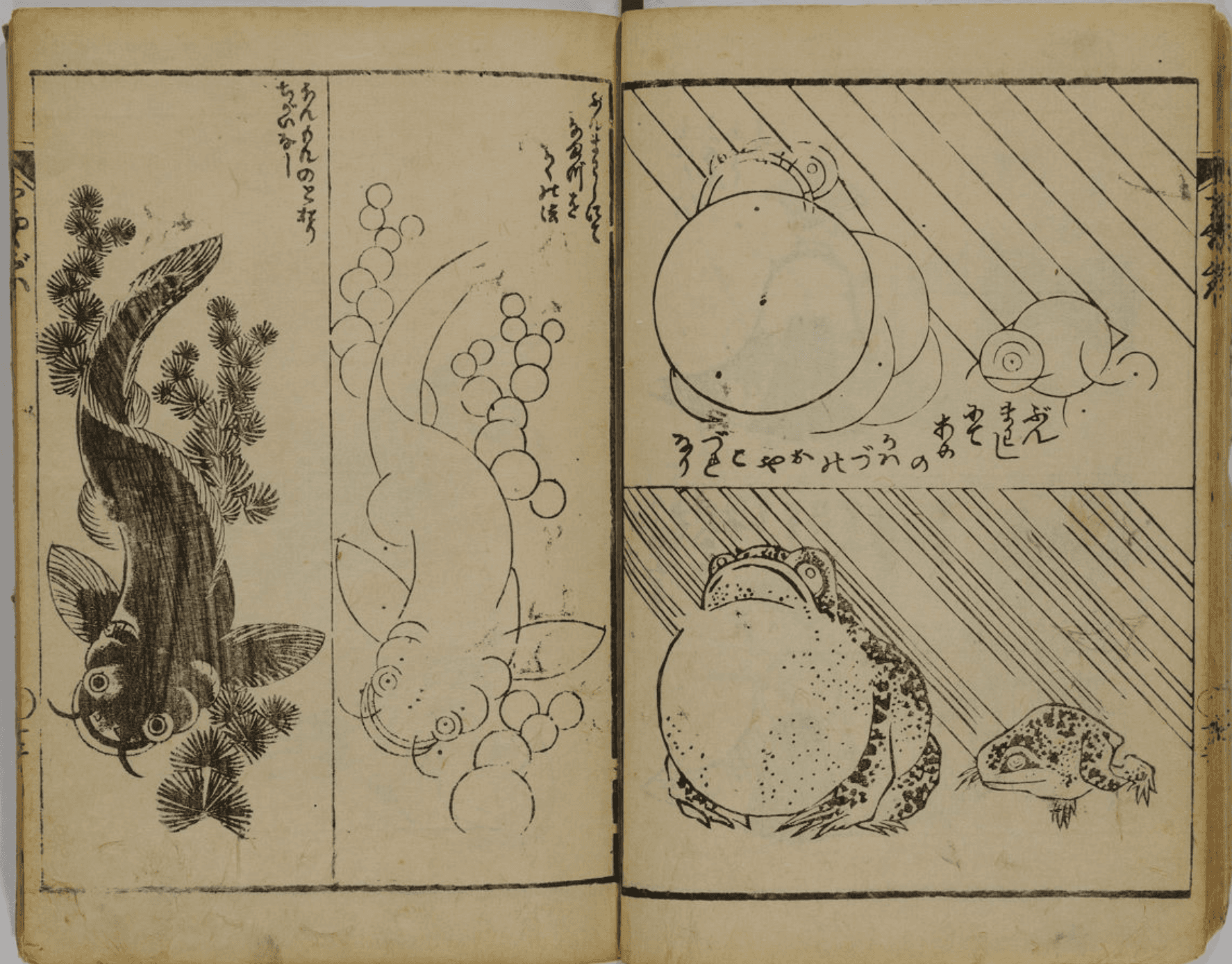
These notebooks were created in 1812 and 1814, and have been recently made accessible online, they rely very little on text. Instead, they communicate through images. And what becomes obvious when browsing through them is how often forms are built from simple units, very frequently circles or ovals.
Before outlines.
Before details.
Before any final shape.
Bodies, faces, animals, everyday objects all seem to emerge from rounded forms, assembled and adjusted until balance is found.
If you look at the images from these notebooks included in this article, this construction method is immediately visible. It doesn’t need explanation. It shows itself.
The circle as a structural tool
What struck me most is not that Hokusai used circles. This approach to drawing exists well beyond Japan. What matters is how the circle is used.
In these manuals, the circle is not decorative. It is structural.
It helps define volume, movement, and relationships between forms. It is the key structure to an harmonious and balanced visual result. Something I also felt and used widely.
Circle and grid, two different logics
The grid is, of course, an essential tool in graphic design. It organizes, aligns, rationalizes. In typography and editorial design, it is often indispensable.
But in my own practice, whether in illustration or in the construction of visual systems, I find the circle far more effective for achieving harmony and equilibrium. I have been incorporating it in my grids for very long.
Where the grid structures, the circle balances.
Where the grid defines limits, the circle creates relationships.
I am not saying designers should dump the grid. But it should not be an universal and mandatory approach. Different cultures lead to different tools, and different tools lead to different visual sensibilities.
A resonance with Japanese visual culture
It would be inaccurate to say that the circle is a universal rule of Japanese design. Japanese visual culture and structure is diverse. But seeing such a clear emphasis on circular construction in Hokusai’s teaching manuals is not insignificant.
Hokusai was not a marginal figure. His imagery shaped the foundations of Japanese visual language, and his manuals were created to transmit knowledge, not merely to showcase a personal style.
In that sense, these notebooks offer an interesting insight into a way of thinking about form that values fluidity, curves, adaptability, and balance over rigid geometry.
When intuition meets historical sources
Discovering Hokusai’s notebooks did not shape the way I work. I just discovered them.
But they helped me understand why certain choices had always felt natural in my process.
Recognizing an intuitive practice reflected in a historical source is not about legitimacy. It is about clarity. About being able to name what was previously felt but not articulated.
I’m Josephine Grenier, a French Art Director and Graphic Designer based in Japan. I help brands bridge cultures through meaningful, elegant, and visually distinctive design. If you’re curious about my work, feel free to subscribe to my newsletter, or get in touch, I’d love to connect.